
Two directions, one production schedule
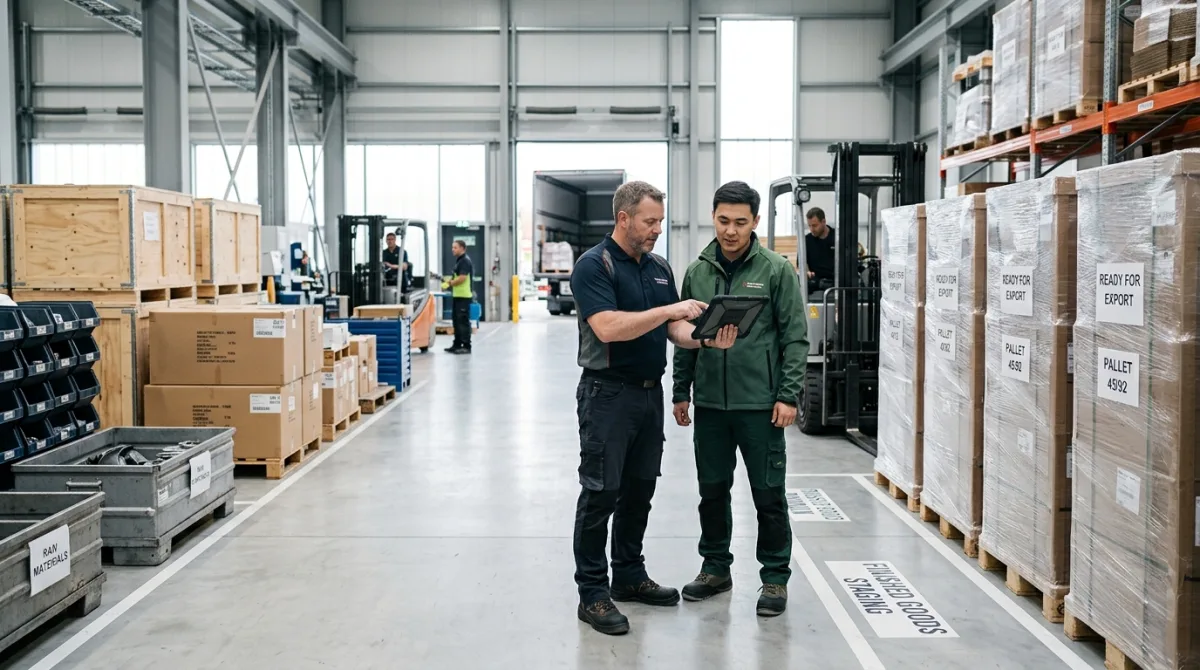
Inbound shipments (raw materials, components, packaging) tend to be recurring and somewhat predictable, tied to a production plan. Outbound shipments (finished goods) are tied to when an order is actually complete, which does not always line up neatly with a full truckload. A production run that finishes a few days before or after a planned dispatch date is one of the most common reasons manufacturers end up needing flexible capacity rather than a single fixed booking.
Because inbound and outbound cargo often looks very different physically, bulk raw material on one leg and packaged, palletized product on the other, it is worth planning them as separate shipments with separate requirements rather than assuming the same vehicle type or schedule works for both.
Matching shipment size to a production batch
Not every production batch fills a truck. Full truckload (FTL) makes sense when a batch is large enough to occupy the vehicle on its own or when the shipper does not want the cargo mixed with other loads; less than truckload (LTL) is usually the more economical choice for a smaller batch, a sample shipment, or a partial run, at the cost of some added time for consolidation.
Freight cost on a shared or part-load basis is usually calculated on chargeable weight, the higher of actual weight and volumetric weight, not actual weight alone. This matters for manufacturers whose product is bulky relative to its weight, such as furniture, HVAC units or packaging materials, where volume rather than weight often determines the cost. Use the LDM calculator or volumetric weight calculator to check this before booking, rather than after receiving a quote that looks high relative to the physical weight.
Packaging and loading, by what you produce
Loading speed and cargo safety both depend on how well the packaging matches the product. The table below is a general starting point; exact requirements depend on the specific product and order.
| Sector | Typical packaging and handling |
|---|---|
| Textile & apparel | Rolls or bales, or cartons and hanging garments on pallets; cargo is usually light relative to its volume. |
| Chemicals & raw materials | Drums, IBC totes or bagged material on pallets; packaging integrity and load securing matter more than with most other cargo. |
| Construction & building materials | Palletized or bulk-bagged materials, sometimes oversized profiles that need a heavy transport vehicle. |
| Electronics & components | Cartons on pallets, often shock or moisture sensitive; consistent handling reduces damage claims. |
| Machinery & equipment | Crated or on a flatbed depending on size and weight; larger units may need heavy transport. |
| Furniture & home furnishings | Cartons, wrapped or crated pieces; volume, not weight, usually drives the freight cost. |
| HVAC | Cartoned or crated units; volume varies significantly by unit size and needs checking before booking. |
| Automotive & spare parts | Boxed parts on pallets, larger components crated; mixed-size orders benefit from careful load planning. |
| Food & beverage | Palletized cartons or drums; products needing temperature control move under refrigerated transportation. |
| Plastics & packaging materials | Bagged granules or resin, or palletized finished packaging; often volume-heavy relative to weight. |
Documentation once the goods leave the plant
An export shipment carries the same core documents regardless of what is being produced: a CMR consignment note completed at loading, a transit document (T1 or TIR Carnet) opened after export clearance, and the commercial invoice and packing list that travel with any commercial cargo. The export declaration itself is filed by the shipper or their customs broker, not the carrier; for manufacturers new to exporting, this is worth confirming early, since a declaration filed late or with a mismatched description is one of the more common causes of a delayed departure.
For the complete sequence these documents follow, from booking to proof of delivery, see How International Road Freight Works.
Where manufacturers lose time
Three patterns come up repeatedly with production-linked shipments. First, a batch that finishes later than planned leaves a vehicle booked with no cargo ready, or cargo ready with no vehicle booked; building a few days of buffer into the dispatch date, or holding stock briefly, avoids most of this. Second, packaging that varies between orders, a pallet height or wrap that changes from one shipment to the next, slows loading and increases the chance of a reservation being noted on the CMR. Third, waiting for a full truckload when the batch is genuinely small costs more in delay than the LTL alternative would have cost in freight.
Where a production run is ready before the planned departure, holding it under storage rather than delaying the truck, or dispatching it partially, is often the more practical option; see Storage Services.
Dealti Logistics and manufacturer shipments
Dealti Logistics moves both inbound raw material and outbound finished goods for manufacturers on the Turkey to Central Asia corridor, in full truckload and less than truckload, with customs clearance services and storage available where a production schedule does not line up with a departure date. For sector-specific detail, see the sector pages linked above, or use the quote form to start a booking.