

Who is involved in an international road shipment
Four parties usually appear in an international road freight movement, and confusing their roles is one of the most common sources of delay:
- Shipper (sender): the party handing over the goods, usually the seller or exporter.
- Carrier: the company that physically moves the goods and is responsible for them between pickup and delivery, and issues or countersigns the CMR consignment note.
- Customs broker: handles the export and import declarations. This can be an in-house team, a freight forwarder, or an independent brokerage appointed by the shipper or consignee, not the carrier.
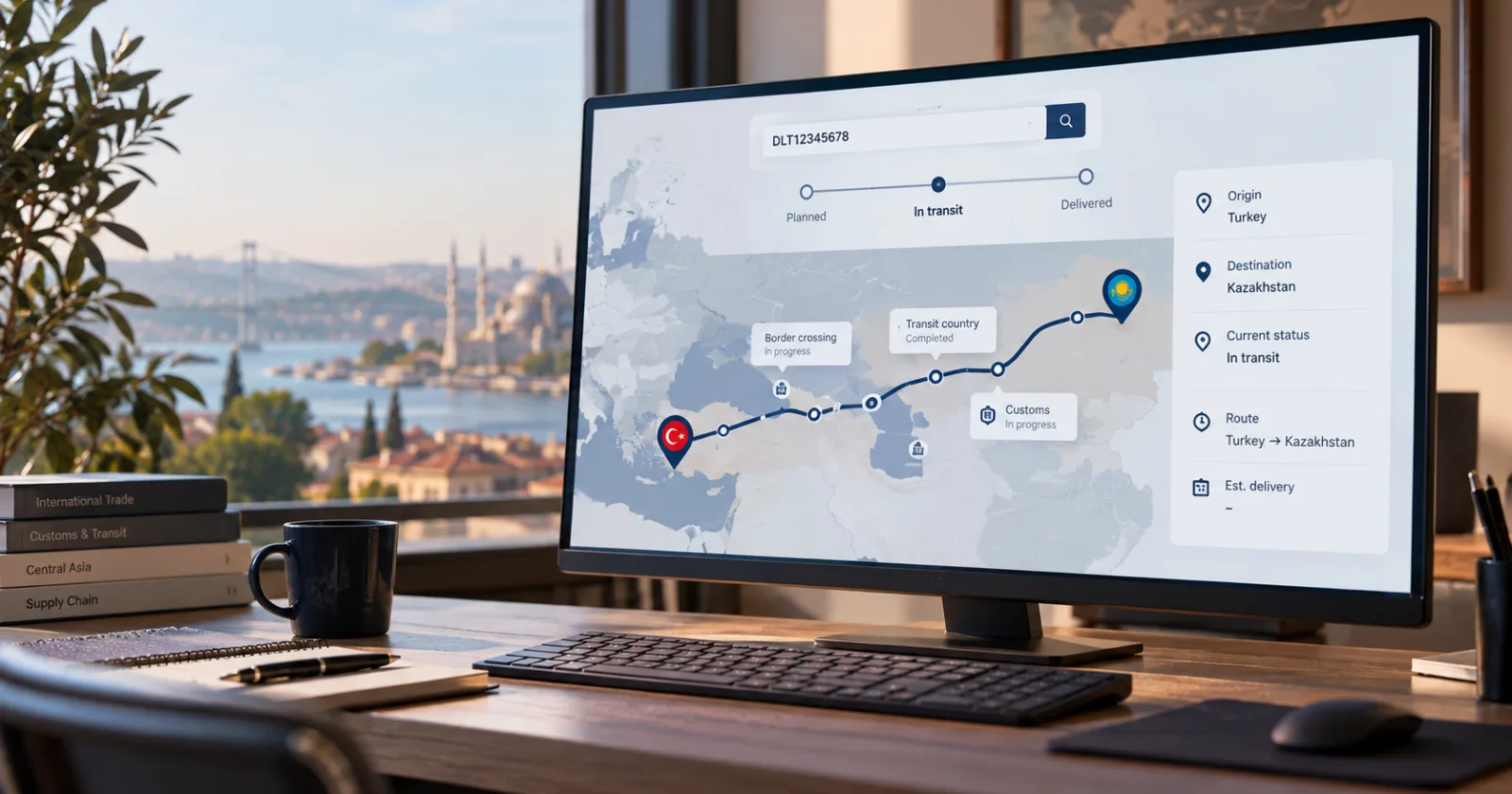
- Consignee (receiver): the party taking delivery at destination, usually the buyer or importer.
A recurring misunderstanding is expecting the carrier to file customs declarations. In most markets the declaration is the customer's or their customs broker's responsibility; the carrier's job is to move the goods and handle the transit documents (T1, TIR Carnet) and the CMR.
The 8 stages, from booking to delivery
1. Booking and quote
The process starts with the shipper describing the cargo (weight, volume, dimensions, whether it needs a full truckload or a shared load, any temperature or handling requirements) and the carrier returning a quote based on route, vehicle type and estimated transit time. This is also when incoterms, loading and delivery addresses, and any special requirements are confirmed.
2. Vehicle and route planning
Once the booking is confirmed, the carrier assigns a vehicle matched to the cargo and plans the route, including which border crossings to use and whether the shipment moves under TIR or a standard transit procedure. Route choice affects both transit time and the customs regime that applies at each border; for indicative transit times on specific corridors, see Road Routes from Turkey to Central Asia.
3. Loading and documentation
At the loading point, the goods are checked, counted and loaded, and the CMR consignment note is completed. Under the CMR Convention, the carrier should check the number of packages, their marks and numbers, and the apparent condition of the goods, and note any reservation on the CMR if something looks wrong; an unreserved CMR is taken as proof that the goods were received in good order. This is also when the packing list, invoice and any certificates travelling with the goods are assembled.
4. Export customs clearance
Before the vehicle can leave the country of origin, the shipper (or their customs broker) files the export declaration. Once cleared, a transit document, usually a T1 or a TIR Carnet, is opened to allow the goods to move through transit countries without paying duties at every border. This step is customs and documentation work, not carriage; the carrier's role here is to have the CMR and the transit paperwork ready and correctly matched to the load.
5. Transit and border crossing
The vehicle crosses one or more transit countries under the cover of the TIR Carnet or T1. At each border, customs checks the transit document against the seal and, where required, the cargo. Any change to route, transhipment, or delay should be reflected in the paperwork, since a mismatch between the transit document and the physical load is one of the most common causes of border hold-ups.
6. Import customs clearance
At the destination country, the consignee (or their customs broker) files the import declaration and pays any applicable duties and taxes. The transit document opened at step 4 is closed once the goods are presented to customs at destination, and the goods are formally released for delivery.
7. Arrival and unloading
The carrier delivers the vehicle to the agreed unloading point. As with loading, the consignee should check the goods against the CMR before or during unloading; this is the point where any damage or shortage needs to be recorded, since the CMR presumes the goods arrived as described unless a reservation is made in time.
8. Proof of delivery
Once the consignee accepts the goods, they sign the CMR, which becomes the proof of delivery (POD). The signed copy travels back to the carrier and, if requested, to the shipper, closing the paper trail for that shipment. If a claim is later raised, this signed CMR and any reservations noted at loading or delivery are the primary evidence; see Carrier Liability and Compensation Under the CMR for how that process works.
Who leads each stage
| Stage | Usually led by | Key document |
|---|---|---|
| 1. Booking and quote | Shipper and carrier | Quote / booking confirmation |
| 2. Vehicle and route planning | Carrier | Route plan |
| 3. Loading and documentation | Shipper and carrier | CMR, packing list |
| 4. Export customs clearance | Shipper / customs broker | Export declaration, T1 or TIR Carnet |
| 5. Transit and border crossing | Carrier | TIR Carnet or T1, CMR |
| 6. Import customs clearance | Consignee / customs broker | Import declaration |
| 7. Arrival and unloading | Carrier and consignee | CMR (checked on delivery) |
| 8. Proof of delivery | Consignee | Signed CMR (POD) |
How long does the whole process take
Total transit time depends on the corridor, the border crossings used, and how quickly customs clearance is completed on both ends; it is not a fixed number that applies to every route. Loading and unloading typically add time on each end beyond the road transit itself, and a border with a queue or an incomplete transit document can add more. For indicative day ranges on specific Turkey to Central Asia corridors, see Road Routes from Turkey to Central Asia.
Where shipments actually get delayed
In practice, delays cluster around three points rather than being spread evenly across the process: an export or import declaration filed late or with missing paperwork, a transit document that does not match the physical load at a border, and a CMR reservation that was not properly recorded at loading, which later complicates a claim. Confirming documentation before the vehicle departs, rather than while it is already en route, avoids most of this.
Dealti Logistics and this process
Dealti Logistics operates road freight between Turkey and Central Asia and follows this process on every shipment: route and vehicle planning, transit (T1 / TIR) and CMR documentation, and coordination at loading, border crossings and delivery. Customs declarations remain the customer's or their broker's responsibility; Dealti's role is the carriage and the transit and delivery documentation around it. For services along the route, see Full Truckload and Customs Clearance Services, or use the quote form to start a booking.
Sources
- Convention on the Contract for the International Carriage of Goods by Road (CMR), Geneva, 19 May 1956, in particular Articles 8-9.
- UNECE, TIR Convention and the TIR Carnet system.
- IRU (International Road Transport Union), road transport and customs transit resources.
This article describes the general sequence of an international road shipment. Exact procedures, required documents and timings vary by country, border crossing and cargo type; consult the relevant customs authority or your customs broker for a specific shipment.